The EU AI Act Goes Full Strength Aug. 2: What It Means for You
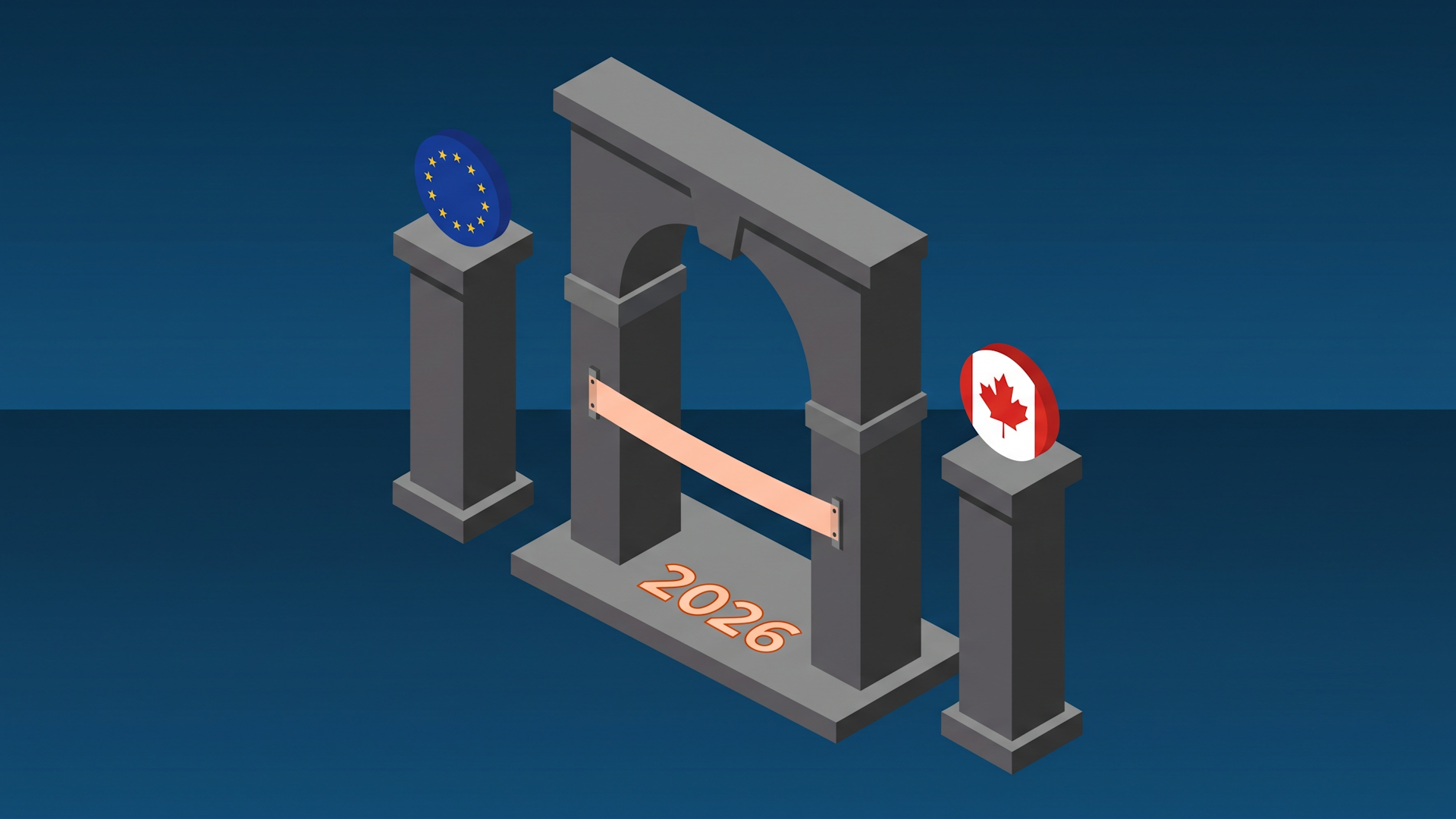
On August 2, 2026, the toughest rules in the world's first comprehensive AI law take effect. Most Canadian small business owners will read that sentence and assume it's someone else's problem. For most of you, it might be, but there's a second reason to pay attention, and it has nothing to do with the EU.
A recent Liberal Party resolution called for a Canadian AI law modelled directly on this same EU framework. So even if you've never had an EU customer, the rules taking full effect this August are a preview of what Ottawa is planning to bring home. Worth ten minutes of your attention either way.
What is the EU AI Act, in plain terms
The European Union's AI Act (Regulation EU 2024/1689 - laying down harmonised rules on artificial intelligence) is the first binding, comprehensive AI law anywhere in the world. It doesn't treat all AI the same way. Instead, it sorts AI systems into four risk tiers and scales the obligations to match:
- Unacceptable risk: banned outright. Things like AI that manipulates people below the level of conscious awareness, or scores citizens' social behaviour. These bans have applied since February 2025.
- High risk: allowed, but only with serious guardrails attached. This is the category most relevant to business, covering AI used in hiring, credit and insurance decisions, and biometric identification.
- Limited risk: lighter obligations, mostly around disclosure. If a chatbot is talking to your customer, the customer needs to know it's a chatbot.
- Minimal risk: no additional obligations. Most everyday AI tools (spam filters, basic analytics) land here, though this category keeps shrinking as generative AI gets baked into more products.
The law has been rolling out in phases since it took effect in August 2024. August 2, 2026, is the date the high-risk rules become fully enforceable, and it's the milestone that matters most for any business using AI to make consequential decisions about people.
What changes on August 2, 2026?
Before this date, a lot of the EU AI Act's real teeth were still being phased in. After it, the obligations for high-risk AI systems apply in full. In practice, that means any organization using AI for things like recruitment and hiring decisions, credit or insurance pricing, or biometric identification has to have already put a formal set of controls in place: risk assessments, human oversight with real authority to intervene, and logs kept for at least six months.
The obligation lands on the business using the tool, not just the company that built it. That's the part people miss. Buying a "compliant" AI product from a reputable vendor doesn't hand off your accountability. If you deploy it, you own what it does.
Who this catches (and why most Canadian small and medium-sized businesses aren't in scope)
Here's the reassuring part first: the EU AI Act mainly applies to organizations with a genuine EU connection. Broadly, it catches your business if:
- You sell AI-enabled products or services directly to EU customers.
- You provide services to EU-based clients who deploy your tools in their own operations.
- You use AI systems that process personal data of people living in the EU, or whose outputs get used in the EU.
If none of that describes you, the law doesn't reach into your business directly. If you do have EU clients or collect any personal information from people in the EU (say, through a website that takes European sign-ups, or a contract with a European partner), it's worth a closer look, because the third trigger above is broader than it sounds.
Why it still matters if you never touch the EU
Even without a direct EU connection, the EU AI Act is quietly shaping the AI tools you already use. The big platforms and model providers most Canadian businesses rely on, the household names in cloud and generative AI, are building their products to meet EU AI Act standards globally, not just for European customers. That's showing up as better documentation, more transparent logging, and built-in human oversight features across the board.
That's useful background. But the real reason to care is closer to home.
A recent Liberal Party resolution called explicitly for a Canadian AI law built on the EU AI Act's blueprint: drafted this year, oversight bodies stood up by 2027, and full implementation by 2028. It follows the same accountability logic already scattered through Canadian law today, where PIPEDA, provincial privacy statutes, and human rights codes hold the business using an AI system responsible for what it does, regardless of who built it.
This isn't Canada's first attempt either. The earlier proposed federal AI law, AIDA, died on the order paper in early 2025, but its core idea (that the organization deploying a "high-impact" AI system is the one accountable for it) is exactly the principle the EU AI Act enforces today, and is what the new resolution wants to bring back.
The EU AI Act isn't a foreign curiosity. It's the closest thing available to a working draft of Canada's next AI law.
What to do about it now?
You don't need to build an EU-grade compliance program this week. A few practical moves put you well ahead of most businesses your size:
- Know where AI is already making decisions about people in your business: hiring, credit, pricing, or anything that touches customer data.
- Ask your AI vendors what compliance documentation they can hand you. If they're building to EU AI Act standards already, that paperwork does double duty as your own due diligence record.
- Write down an Acceptable Use Policy, even a short one, so staff know what's approved and what isn't.
- Flag anything that looks "high-risk" under the categories above, and put a human in the loop who can override the tool if something looks wrong.
None of this needs to happen by August 2. But starting now means you're not scrambling when Canada's own version shows up.
This article is general guidance, not legal advice. Consult a qualified professional for decisions specific to your business.
If you want a clear picture of where your business stands, book a consultation with Evolutie and we'll help you map it out.